
Boring History for Sleep

Boring History for Sleep

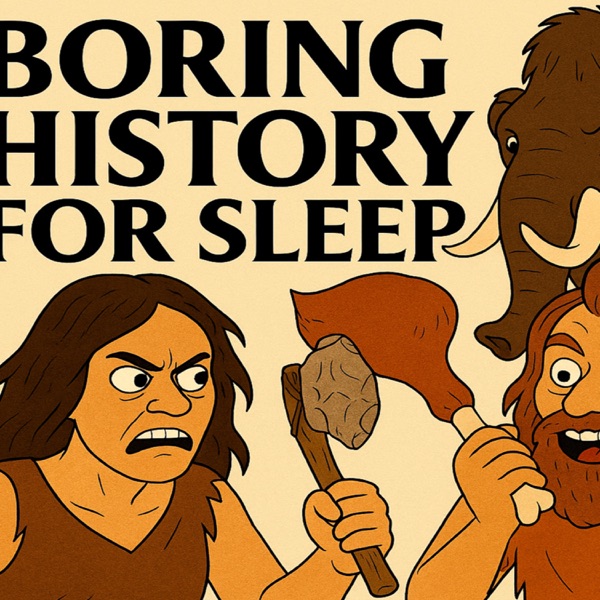
Welcome to Boring History to Sleep — the only show where falling asleep in the middle is not only allowed… it’s encouraged. Each episode takes you on a slow, uneventful stroll through the most yawn-worthy corners of the past: treaties nobody remembers, kings who ruled for three weeks, and revolutions that never really got started. Delivered in the softest, most sleep-inducing voice we could find, this show is like warm milk with a side of ancient trivia. Perfect for insomniacs, history nerds, and anyone who thinks a Roman tax policy discussion sounds like a lullaby. Lay back, close your eyes
00:00
00:00

Episode's summary

This episode explores the complex, human reality of Edgar Allan Poe, moving beyond his gothic legend to examine a life defined by tragedy, financial instability, and unparalleled literary innovation. From his turbulent childhood as a ward in Richmond to his formative years in London, we trace how personal loss and social displacement provided the emotional bedrock for his work. As Poe transitioned from a struggling student to a pioneering journalist and critic, he faced profound professional struggles, including debt, alcoholism, and the devastating loss of his wife, Virginia. Despite these hardships, he fundamentally reshaped American literature, inventing the detective fiction genre through Auguste Dupin and establishing technical standards for literary criticism that left a lasting global legacy.

Chapters

Click on a chapter to go directly to that moment

Highlights

The man who invented the detective story died as one of history's most unsolved mysteries.

00:02:04 · This highlights the irony between Poe's literary achievements and his mysterious, impoverished death.

The horror in Poe's stories is not located in the building, it is located in the narrator's mind.

00:17:28 · This highlights Poe's innovation in transforming external Gothic tropes into internal psychological terror.

His position laid out in various critical essays and editorial prefaces throughout his career was that dishonest praise was a form of corruption.

00:43:49 · This highlights Poe's revolutionary and principled approach to literary criticism, which rejected the polite, noncommittal standards of his era.

Before Edgar Allan Poe sat down to write The Murders in the Rue Morgue in 1841, detective fiction did not exist.

01:36:09 · The speaker asserts Poe's role as the creator of a new literary genre.

Nine dollars. That is what the American Review paid Edgar Allan Poe for The Raven.

02:07:08 · This highlights the extreme financial disparity between Poe's massive cultural impact and his actual earnings from his most famous poem.

Episodes

469-

The Tragic Life of Edgar Allan Poe 🕯️📖 | The Writer Who Lost Everything | Boring History For Sleep

This episode explores the complex, human reality of Edgar Allan Poe, moving beyond his gothic legend to examine a life defined by tragedy, financial instability, and unparalleled literary innovation. From his turbulent childhood as a ward in Richmond to his formative years in London, we trace how personal loss and social displacement provided the emotional bedrock for his work. As Poe transitioned from a struggling student to a pioneering journalist and critic, he faced profound professional struggles, including debt, alcoholism, and the devastating loss of his wife, Virginia. Despite these hardships, he fundamentally reshaped American literature, inventing the detective fiction genre through Auguste Dupin and establishing technical standards for literary criticism that left a lasting global legacy.

09 Aug 2026
468-

The Tragic Gilded Age Socialite Who Lost Everything 💎🕯️ | Boring History For Sleep

This episode examines the systemic psychological and social pressures exerted on women during the Gilded Age. It explores how extreme wealth and rigid social performance created environments of profound isolation, where children were raised as decorative objects and women were transformed into public symbols through beauty standards and media scrutiny. Through the lives of figures like Sylvia Wentworth Cross, Rosalind Pemberton, and Violet Harcastle Lennox, the narrative traces the transition from individual tragedy to structural analysis. The episode argues that the era's true legacy was not found in its material splendor, but in a social machinery that prioritized public image and sensationalist media narratives over the humanity and agency of the individuals within it.

08 Aug 2026
467-

The Entire History of Iran 🇮🇷🐪 | From Ancient Persia to Modern Times | Boring History For Sleep

This episode traces the 5,000-year trajectory of Iranian civilization, exploring its unique capacity for survival through cultural absorption and administrative resilience. From the ancient sophistication of Elam and the foundational diplomacy of the Achaemenid Empire to the intellectual revolutions of Zoroastrianism, the narrative examines how Persian identity persisted through successive conquests by the Greeks, Arabs, Mongols, and Turks. The discussion moves from the strategic governance of Cyrus the Great to the modern struggles for sovereignty in the face of 19th-century imperial encroachment and 20th-century political upheavals. Ultimately, the episode argues that contemporary Iranian geopolitics cannot be understood without acknowledging the deep-seated civilizational continuity that has allowed its language, science, and administrative traditions to shape the modern world.

07 Aug 2026
466-

How One Family Tore England Apart 👑⚔️ | The House of York | Boring History For Sleep

This episode traces the dramatic rise and violent fall of the House of York, a short-lived English dynasty born from the overlapping genealogical claims of King Edward III's descendants. From its origins as an 'over-mighty family' accumulating immense power in Northern England to its central role in the bloody Wars of the Roses, the narrative explores how political survival, strategic alliances, and personal vendettas shaped the fate of the English throne. The saga follows key figures such as Richard, Duke of York, and the shifting tides of power between the Houses of York and Lancaster. Through tales of battlefield betrayals at St Albans and Towton, the rise of the Tudor dynasty at Bosworth Field, and the eventual disappearance of the 'lost princes,' the episode examines the structural instability of medieval kingship and the enduring historical legacy of a dynasty that once held the keys to the kingdom.

06 Aug 2026
465-

History's Greatest Mysteries We Still Can't Explain 🏛️❓ | The Missing Pieces of the Past | Boring History For Sleep

This episode explores the profound gaps and mysteries within the human historical record, from the ancient stone pillars of Göbekli Tepe to the submerged landscapes of Doggerland. It examines how rising sea levels, volcanic winters like the catastrophe of 536 CE, and the collapse of Bronze Age civilizations have physically erased much of our shared past. Through the lenses of genomic science, LiDAR technology, and archaeology, we investigate how 'ghost populations' and hidden urban landscapes are being rediscovered. However, despite these technological leaps, the episode concludes that a vast majority of human history—the lives of the unrecorded billions and the contents of lost oral traditions—remains an irreducible darkness in the human story.

05 Aug 2026