
BBC 随身英语
Disclaimer: this podcast uses an A.I. generated voice because the host is not native english speaking.
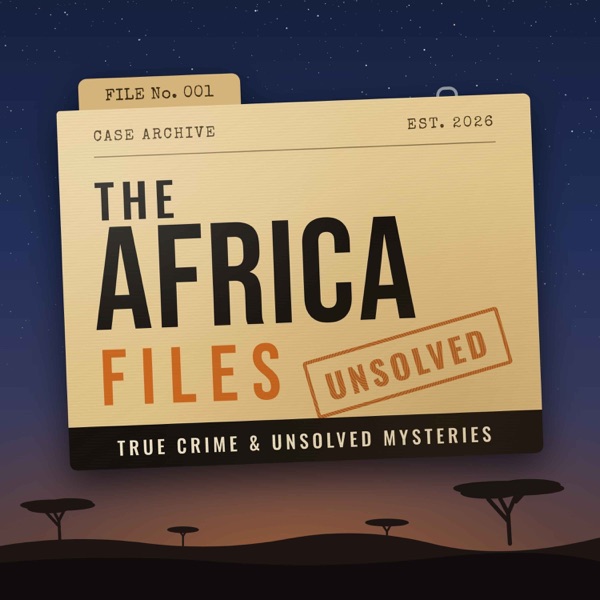
The Africa Files is a true crime and unsolved mysteries podcast about Africa's most remarkable criminal cases, from serial killers and heists to cold cases and disputed convictions. Each episode opens one file from Egypt, Morocco, Libya, Nigeria, Ghana, Liberia, Senegal, Kenya, Tanzania, Uganda, Ethiopia, Rwanda, DR Congo, Cameroon, South Africa, Zimbabwe, Botswana, Mozambique or Madagascar.
Some cases are famous across the continent and others are rarely covered in English at all. In every episode we look at what happened, who was involved, how investigators chased the truth, and the cultural and historical context that helps explain why it happened there and then.
WHAT YOU'LL HEAR
• Serial killer cases, including the sisters who terrorized 1920s Alexandria and the poisoner of 1930s Johannesburg
• Unsolved mysteries, such as a bomber lost in the Libyan desert, a liner that vanished off South Africa, and a president's missing gold
• Heists and stolen treasures, from a sacred statue taken from Cameroon to a Van Gogh cut from its frame in Cairo
• Disputed convictions and cold cases, where courts reached a verdict but questions remain
• Organized crime stories, from armed robbery gangs in Nigeria to an outlaw empire on an island in the Nile
• Ancient crimes, with real trial records from pharaonic Egypt
HOW WE TELL THESE STORIES
Every case is real and well documented, built on court records, official reports and reputable reporting. Victims are named and remembered. Violence is acknowledged but never described in graphic detail. Anyone who was not convicted is described as alleged, and theories are always clearly labeled as theories. We explain local history, language and customs with respect, so you don't need to know the country to follow the story. Cases involving sexual violence are not covered, and neither are ongoing trials or live political conflicts.
WHO THIS PODCAST IS FOR
This show is for true crime listeners who want something beyond the usual American and British cases. It is also for anyone curious about African history, law and society, and for listeners from across Africa and the diaspora who want their own stories told carefully. If you like a calm, story-driven narration that respects the people involved, you'll feel at home here.
PERFECT FOR
• Fans of true crime, cold cases and unsolved mysteries
• History lovers interested in Africa, colonial history and the ancient world
• Listeners who enjoy The Europe Files and The Asia Files
• Commutes, long drives, walks and quiet evenings
• Anyone who prefers thoughtful true crime without gore or sensationalism
FOLLOW AND SUBSCRIBE
Follow The Africa Files on Spotify, Apple Podcasts, Amazon Music, YouTube Music or wherever you listen, so new episodes arrive automatically. If you enjoy a file, please leave a rating or review. It really helps new listeners find the show.
ABOUT THE SHOW
The Africa Files is created by Robin Verrue, an independent podcast creator from Belgium and the creator of The Europe Files and The Asia Files. Scripts are researched and written with the help of AI, fact-checked by Robin, and narrated with an AI-generated voice. Each episode is one complete case, so you can start anywhere.
Search terms: true crime Africa • African true crime podcast • unsolved mysteries Africa • South Africa true crime • Egypt true crime • Nigeria true crime • Kenya true crime • serial killer Africa • cold cases Africa • African history podcast
Hosted on Acast. See acast.com/privacy for more information.
Disclaimer: this podcast uses an A.I. generated voice because the host is not native english speaking. Episode 18 - The Desecration of the Golden Stool | Ghana, 1921 | Heist Around 1921, in the Asante region of the Gold Coast, today's Ghana, workers discovered the hidden Golden Stool, the most sacred object of the Asante nation, and stripped it of gold ornaments. The heist became a turning point in relations between the Asante and British rule. The Golden Stool, Sika Dwa Kofi, is believed to hold the soul of the Asante people and must never touch the ground. In 1900, Governor Frederick Hodgson demanded to sit on it, sparking the War of the Golden Stool led by Yaa Asantewaa. The stool stayed hidden for about 20 years. After its desecration, the British allowed the men to be tried by an Asante court, which sentenced them to death. The British commuted the sentences to banishment and promised not to interfere with the stool again. Sources on the incident are thin, and even its date is sometimes given as 1920.…
Disclaimer: this podcast uses an A.I. generated voice because the host is not native english speaking. Episode 18 - The Desecration of the Golden Stool | Ghana, 1921 | Heist Around 1921, in the Asante region of the Gold Coast, today's Ghana, workers discovered the hidden Golden Stool, the most sacred object of the Asante nation, and stripped it of gold ornaments. The heist became a turning point in relations between the Asante and British rule. The Golden Stool, Sika Dwa Kofi, is believed to hold the soul of the Asante people and must never touch the ground. In 1900, Governor Frederick Hodgson demanded to sit on it, sparking the War of the Golden Stool led by Yaa Asantewaa. The stool stayed hidden for about 20 years. After its desecration, the British allowed the men to be tried by an Asante court, which sentenced them to death. The British commuted the sentences to banishment and promised not to interfere with the stool again. Sources on the incident are thin, and even its date is sometimes given as 1920.…
Disclaimer: this podcast uses an A.I. generated voice because the host is not native english speaking. Episode 18 - The Desecration of the Golden Stool | Ghana, 1921 | Heist Around 1921, in the Asante region of the Gold Coast, today's Ghana, workers discovered the hidden Golden Stool, the most sacred object of the Asante nation, and stripped it of gold ornaments. The heist became a turning point in relations between the Asante and British rule. The Golden Stool, Sika Dwa Kofi, is believed to hold the soul of the Asante people and must never touch the ground. In 1900, Governor Frederick Hodgson demanded to sit on it, sparking the War of the Golden Stool led by Yaa Asantewaa. The stool stayed hidden for about 20 years. After its desecration, the British allowed the men to be tried by an Asante court, which sentenced them to death. The British commuted the sentences to banishment and promised not to interfere with the stool again. Sources on the incident are thin, and even its date is sometimes given as 1920.…
Disclaimer: this podcast uses an A.I. generated voice because the host is not native english speaking. Episode 17 - Hadj Mohammed Mesfewi, the Marrakesh Killer | Morocco, 1906 | Serial Killer In April 1906, in Marrakesh, Morocco, the disappearance of young women was traced to the shop of a respected cobbler and public letter writer, Hadj Mohammed Mesfewi. It became the most notorious serial killer case in Moroccan history. According to reports of the time, young women who came to his shop to dictate letters were killed and robbed, with help from an elderly woman named Annah, and their remains were hidden under the shop and in a garden. A family tracing their missing daughter led investigators there. Foreign newspapers reported 36 victims, a figure that cannot be independently confirmed. Mesfewi confessed and was sentenced to death. After foreign diplomats protested the original sentence, he was executed in a cruel public way in June 1906. The case unfolded as the Algeciras Conference decided Morocco's…
Disclaimer: this podcast uses an A.I. generated voice because the host is not native english speaking. Episode 16 - The Foster Gang and the Kensington Cave | South Africa, 1914 | Organized Crime In 1914, on the Witwatersrand around Johannesburg, South Africa, a gang led by prison escapee William Foster carried out a wave of robberies that ended in a dramatic cave siege. It is one of the most famous organized crime stories in South African history. Foster, with John Maxim and Carl Mezar, robbed a bank in Boksburg North, where barman Alex Charlson was fatally shot, and post offices in Roodepoort and Vredendorp. After a liquor store robbery in Doornfontein on 13 September 1914, Detective Mynott was shot dead, and the largest manhunt in South African police history began. Roadblocks went up across Johannesburg, and at one of them General Koos de la Rey was shot dead by accident, fueling the Maritz Rebellion. On 16 September, tracker dogs led police to a cave in Kensington, where thousands of spectators gathered.…
Disclaimer: this podcast uses an A.I. generated voice because the host is not native english speaking. Episode 15 - The Kanungu Fire and the Vanished Leaders | Uganda, 2000 | Unsolved Mystery On 17 March 2000, in Kanungu in southwestern Uganda, a church belonging to the Movement for the Restoration of the Ten Commandments of God was set on fire with its doors and windows nailed shut. More than 500 people died. It remains one of Africa's darkest unsolved mysteries. At first it was called a mass suicide. But police soon found hundreds more bodies buried at other properties of the movement, in Buhunga, Rugazi and Kampala, many killed in the weeks before. The death toll reached around 1,000. The movement's leaders, including Joseph Kibwetere, Credonia Mwerinde and former priest Dominic Kataribabo, had prophesied the end of the world for 31 December 1999. When it did not come, members began asking for their property back. A 2002 Uganda Human Rights Commission report found the killings were planned by the…
Disclaimer: this podcast uses an A.I. generated voice because the host is not native english speaking. Episode 14 - Ishola Oyenusi, Doctor Rob and Kill | Nigeria, 1971 | Organized Crime In 1971, in Lagos, Nigeria, an armed robbery gang led by Ishola Oyenusi, who called himself Doctor, carried out a wave of violent robberies. It became one of Nigeria's most famous organized crime cases, ending in a public execution on Bar Beach. After the civil war ended in 1970, weapons were everywhere and armed robbery surged. The military government of Yakubu Gowon made it a capital crime under the Robbery and Firearms Decree. Oyenusi's gang stole cars and robbed factories and banks. In March 1971 they raided the WAHUM factory in Ikeja, taking around 28,000 Nigerian pounds, and a police constable was killed. Oyenusi was arrested on 27 March 1971. He and 6 gang members were executed by firing squad on 8 September 1971 in front of a crowd reported at 30,000. A newspaper said he died smiling. Armed robbery did not stop. In…